Sustainable Gift Ideas That Are Not a Lecture
There is a specific way sustainable gifting goes wrong, and most people have been on the receiving end of it. You unwrap a bamboo cutlery set, or a set of beeswax wraps, or a stainless steel straw, and underneath the gift is a message: the way you currently live is a problem, and here is the correction.
The gift might be perfectly good. The framing ruins it. A gift is supposed to be about the person receiving it, and the moment it becomes about the giver's values it stops being a gift and becomes advocacy with a bow on it.
None of which means you should give up on the idea. It means the environmental part should be the reason you chose between two good options, not the reason the object exists.
The Test That Sorts It Out
Ask one question: if the environmental angle did not exist, would this still be a gift this person wanted?
A beautiful wool blanket passes. A good knife that will last thirty years passes. A really excellent bar of soap from a maker two towns over passes. A bag of loose reusable produce bags does not, because nobody has ever wanted one — they have only ever been told they should.
The good version of low-waste gifting is almost always the same thing as the good version of ordinary gifting: buy fewer, better objects that last, and skip the ones that are cheap because they were built to be thrown away.
Buy Better, Not Greener
The single most environmentally useful thing you can do with a gift budget is spend it on one thing that will still be in use in a decade, rather than three that will not survive the year.
Cast iron and good stainless steel outlive their owners. A proper wool sweater lasts twenty years and a synthetic one lasts three. Solid wood furniture gets repaired; particle board gets replaced. Leather ages; coated fabric peels. None of this needs to be said out loud when you hand it over — the recipient just gets a nicer thing.
This also quietly solves the price problem. A single well-made item at eighty dollars looks and feels more generous than four items at twenty, and it is the cheaper option over the object's life.
Consumables Are the Easy Win
Anything that gets used up leaves nothing behind to store, replace, or eventually discard. Good food, good drink, good soap, good candles. A subscription to something they consume anyway — coffee, tea, a magazine they read.
Buying these locally has a second benefit beyond the shipping distance: small producers tend to package lightly because elaborate packaging is expensive, whereas a large brand's gift set is frequently three quarters air and moulded plastic.
The one caveat is to buy things they already use. A consumable in a flavour or scent they dislike is worse than an object, because they cannot even donate it.
Secondhand, Handled Well
Vintage and secondhand gifts have moved a long way from apologetic. A first edition, a piece of mid-century glassware, a proper cast iron pan with fifty years of seasoning, a record they have been hunting — all of these are better because they are old, not despite it.
Two rules make this work. Buy things where age is a feature rather than a compromise, and be upfront about it. "I found this in a shop in Kingston and thought of you" is a story. Presenting something secondhand as new is the only version of this that fails.
What does not work secondhand is anything with hygiene or safety implications, anything sized where you are guessing, and anything with a battery that has already lived most of its life.
Experiences Instead of Objects
An experience produces no packaging, no shipping, no storage, and no eventual disposal. It is the lowest-impact gift category by a wide margin and it happens to be one people rate highly.
Tickets, classes, memberships, a meal, a day somewhere. For anyone in a small apartment this is often the most genuinely welcome thing you can give, entirely separately from the environmental question.
The practical caution is scheduling. An experience that requires the recipient to organise something is partly a chore, so book the date if you can, and give plenty of notice.
The Wrapping Is Half the Waste
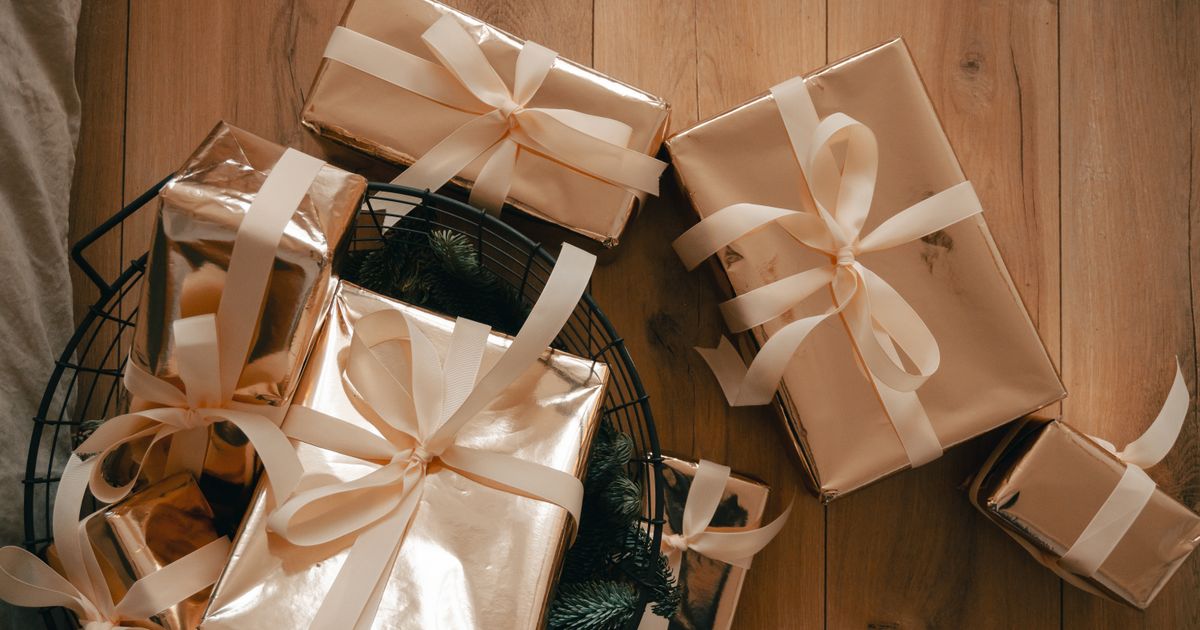
A large share of the rubbish a gift generates is not the gift. Glitter paper and foil-backed wrap cannot be recycled in most Canadian municipal programs and goes straight to landfill, as do most bows and plastic ribbon.
Plain kraft paper is recyclable, cheap, and looks better than almost anything with a pattern on it. Add string, a sprig of something from outside, and a hand-written tag and you have a parcel that photographs better than the foil version. Fabric wraps, tea towels, and scarves work as wrapping and are part of the gift. Newspaper, done deliberately rather than apologetically, looks sharp.
The quick test for paper: scrunch it. If it stays scrunched it is probably paper and recyclable. If it springs back it has a plastic or foil layer and it does not.
Fewer Wrong Gifts Is the Whole Point
Here is the part that gets least attention and matters most. The largest environmental cost in gift-giving is not the wrapping or the shipping. It is the gifts that were not wanted.
An unwanted gift has consumed everything a wanted one does — materials, manufacturing, transport, packaging — and then produces a second round of it when it is returned, restocked, or, very often, quietly thrown out. Returned goods do not reliably go back on the shelf; a significant proportion are liquidated or destroyed because processing them costs more than they are worth.
Which makes accuracy the most sustainable thing in gift-giving, and it is boring and unglamorous and nobody puts it on a poster. Asking what someone wants, and buying that, eliminates more waste than any amount of bamboo.
A shared list is simply the organised version of asking. It also stops duplicates, which is the other quiet source of returns — two people buying the same thing is one gift and one unnecessary object, every time. If you want a low-waste holiday, that is where to start, before you think about the paper.
Keep browsing
More ideas in home & living and experiences.
Or create your own free wishlist — add gifts from any store, share one link, and let people claim what they are buying so nothing arrives twice.
As an Amazon Associate we earn from qualifying purchases. Prices and availability are accurate as of the date shown and are subject to change.