How to Get Gifts Without Giving Out Your Address
Most advice about wishlist privacy stops at "don't post your address". Fair enough, but somebody still has to write something on the box. If a friend from an online group, a coworker you have met twice, or a few hundred people who watch you play games want to send you something, the gift needs somewhere to go, and that somewhere is the part worth thinking about.
This guide goes through the real options, what each one involves, and what each one still gives away. If you are setting up a list for an audience, our streamer wishlist guide covers the list side. If you want to tidy up a list you have already shared, start with how to share a wishlist without your home address.
First, Work Out Who You're Keeping It From
The right answer depends on who will see the destination. A gift from your aunt can come to your door. A gift from someone you only know online probably shouldn't. Most lists land somewhere in between, so it helps to sort the people who might buy from yours into three rough groups:
- People who already know where you live. Family and close friends. Nothing to protect here.
- People you know but would rather not give your address to. Coworkers, a book club, other parents from your kid's class, your partner's extended family. A pickup point, or gifts brought in person, is usually enough.
- People you have never met. Online friends, followers, viewers, readers. Treat any address they can see as public, because one screenshot is all it takes.
Choose the option that suits the least trusted group. You can always give your real address privately to the people in the first one.
Option 1: Have Gifts Brought, Not Shipped
The oldest privacy tool there is. For a birthday dinner, a shower, an office party or a Secret Santa, put "please bring gifts on the day" in the list description and the address question disappears. Guests still buy from the list; they carry the gift in instead of having it delivered.
It falls down for anyone who lives far away or can't make the date, so most lists that use it also offer a second route for those people.
Option 2: Ship to a Pickup Point
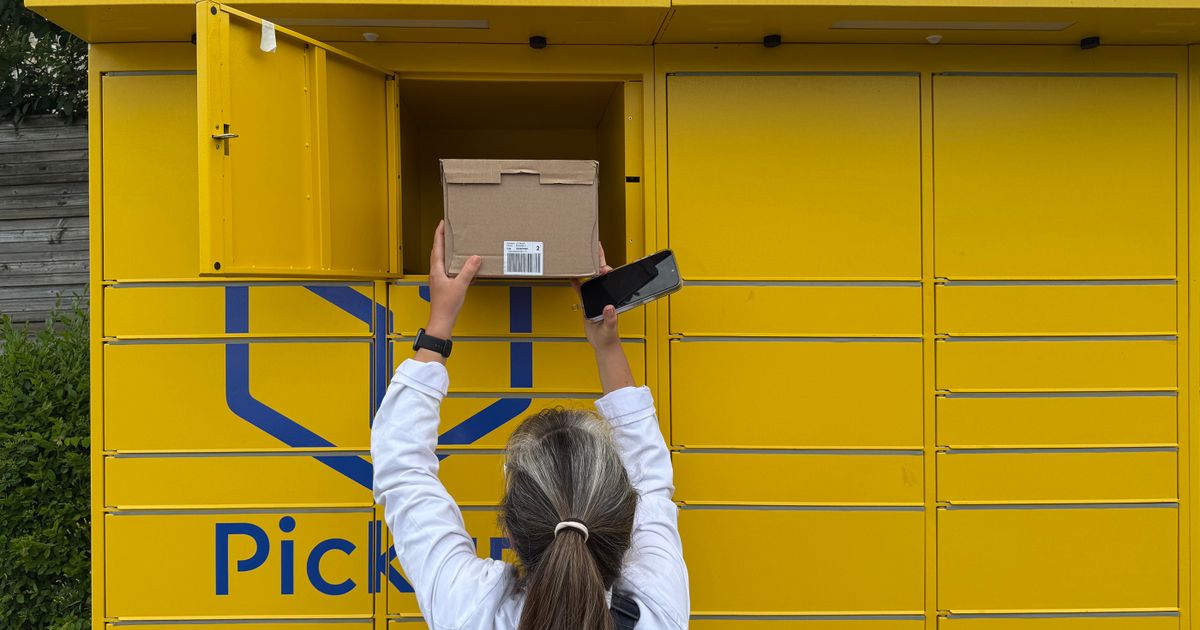
Parcel lockers and pickup counters hold a package until you collect it, so the address on the box belongs to a store or a post office rather than your home. They are cheap or free, and you can usually choose one near work instead of near home, which helps more than you might think.
- Canada Post FlexDelivery is free. You sign up using the name and address on your government photo ID, pick a participating post office, and get a shipping address made of a PO box number and a customer ID. When something arrives you get a notice, then collect it with ID.
- Carrier pickup locations, such as UPS Access Point and FedEx Hold at Location, do a similar job. The catch is that the buyer usually has to choose that delivery option at checkout, which is a lot to ask of someone buying you a present.
- Retailer lockers and counters, Amazon's being the best known, only work for orders from that retailer.
Two things to know before you rely on one. Pickup services generally need the parcel addressed to your real name, because you will show ID to collect it, so this hides where you live but not who you are. And not every online store will ship to a post office box, so check a store's shipping policy before you put a FlexDelivery address on a list full of its products.
Option 3: Rent a Box
If gifts will keep arriving from people you don't know, a rented box is the steadier answer. It is also what Amazon told wishlist owners to use after it changed how public lists handle third-party orders in 2026, which we cover in what your Amazon wishlist reveals about you.
- A post office box from Canada Post or USPS is the cheapest rented option. The limits are size and carriers: a small box fills quickly, and courier companies may not deliver to one at all. Some US post offices offer street addressing for box holders so couriers can deliver there, but not all do, so ask before you sign up.
- A private mailbox at a shipping store, such as The UPS Store, gives you a street-style address with a box number. These usually accept parcels from every carrier and hold large items behind the counter, which makes them the most flexible choice. They also cost noticeably more than a post office box.
Whichever you pick, save it as its own address in your browser's autofill and in each store account you use. The most common leak isn't a hacker. It's you choosing the home address out of habit at the bottom of a long checkout.
Option 4: Borrow an Address
A parent, a sibling, a friend across town. This is how a lot of wedding gifts travel anyway, and for a one-off occasion it works well. Ask before you put their address anywhere, give them an idea of how many parcels to expect, and agree when you'll pick things up. Bear in mind that it moves the privacy question onto them, so it suits lists shared with people you broadly trust rather than total strangers.
Work is the other borrowed address people reach for. Some offices are happy to take personal parcels and some have a firm rule against it, so ask first. And remember that a work address tells a stranger where you spend most of your week, which isn't nothing.
Option 5: Ask for Things That Need No Address
Some of the best gifts never touch a box: e-gift cards, games and ebooks, a subscription, tickets to a class or a show, a donation to something you care about, a contribution toward a bigger item. They all arrive by email.
A list doesn't have to be all one or the other. Put a few of these next to the physical items and anyone you'd rather not share an address with has something easy to choose. If you go this way, consider a separate email address just for gifts, so a gift card doesn't put your main inbox in front of a stranger.
What Still Leaks
Every option above keeps your street off the label. None of them is airtight, and these are the usual gaps:
- Your name. Pickup services and post offices need it. If people know you by a nickname or a handle, your legal name on a label is new information to them.
- Your area. A locker five minutes from home tells people roughly where home is. Choosing one near work, or across town, costs a bit of time and blurs that picture.
- Tracking. Shipping updates and tracking pages sent to the buyer can show where a parcel ended up, sometimes in more detail than you'd like. That's one more reason not to use your front door for people you don't know.
- Returns and thank-yous. Exchanges, return labels and thank-you notes carry an address too. Use the same box or pickup point as the return address.
- Photos. Unboxing a gift on camera with the shipping label still on it undoes all of the above. Take the label off before the camera comes out.
Putting It on Your List
On Send Me Your Gifts, a list is a set of items from any store with your notes, and guests buy straight from the store. The site never asks for your address and never shows one, so how gifts reach you is yours to spell out, and the list description is the place to do it. A few lines that work:
- "Please bring gifts to the party on the 14th. If you can't make it, message me and we'll work something out."
- "Please ship to my FlexDelivery address below. It's a post office, so choose Canada Post shipping where you can."
- "Gift cards and digital gifts are perfect. Send them to the email in the notes."
Make the list unlisted rather than public so it only opens for people with the link. Guests who would rather stay anonymous can tick "Keep my name a surprise" when they claim something. Privacy ought to cut both ways.
When you're ready, make a free wishlist, and write the delivery note before you add a single item.
Keep browsing
Read how to share a wishlist without your home address, or browse the most wished for gifts.
Or create your own free wishlist — add gifts from any store, share one link, and let people claim what they are buying so nothing arrives twice.